FAQ: selective cutting and continuous-cover forestry
Continuous-cover forestry (hyggesfritt skogsbruk) is attracting growing interest among forest owners—but also questions and misconceptions. What does selective cutting (plockhuggning) actually mean? What happens to volume growth, storm sensitivity, and machine damage? And how are light-demanding species like pine affected?
What is selective cutting?
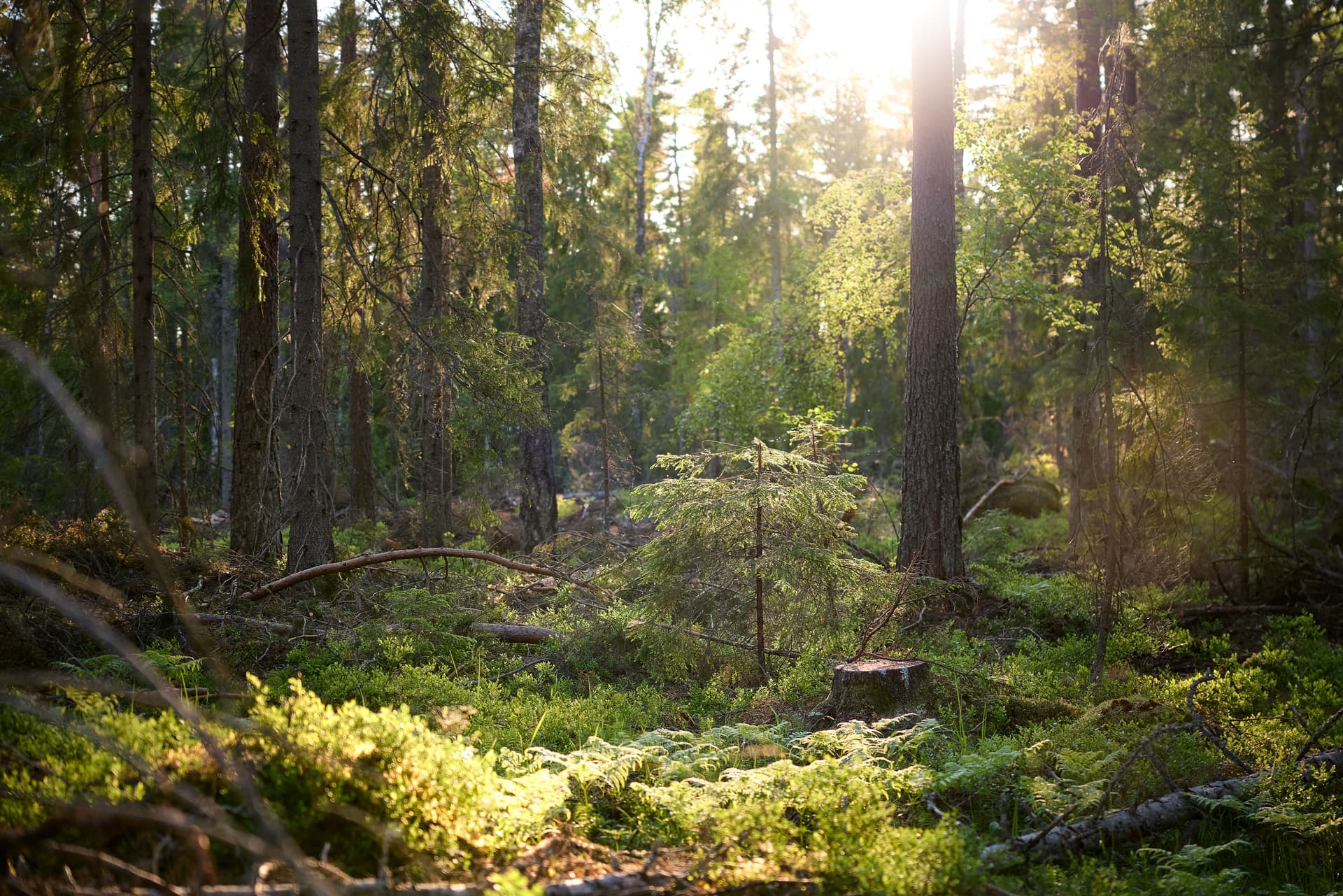
Selective cutting is a harvesting method where scattered individual trees are removed across the forest. Removals typically target trees with specific characteristics or trees above a certain diameter. Compared to clearcut forestry, removals are usually smaller, which over time can result in a multi-layered forest with varied tree sizes and ages.
Are selective cutting and continuous-cover forestry the same thing?
No. Put simply, selective cutting is one continuous-cover method. Continuous-cover forestry is an umbrella term for forest management approaches that do not leave forest land without trees—unlike clearcut forestry (trakthyggesbruk), which is Sweden’s traditional forestry system. The term includes many methods, from gap cutting (luckhuggning) and shelterwood retention (överhållen skärm) to uneven-aged management (blädning) and selective cutting—methods that don’t necessarily have much in common beyond avoiding large clearcuts.
At Hyggligt, we carry out optimized, profitable harvests using our unique method: centered selective cutting (centrerad plockhuggning). Read more about our method and harvesting with us using continuous-cover methods.
What types of forests and sites are suitable for selective cutting?
Selective cutting can be used in all production forests. If a forest is suitable for forestry at all, it’s also suitable for selective cutting—but the starting stand structure determines whether it’s the most profitable choice from the very first operation.
Multi-layered forests can develop and be optimized in many places, but some stand types require a cautious transition to selective cutting, which can reduce profitability during the transition period. Our centered selective cutting method, as defined by the Hyggligt concept, is particularly well suited to forests where both profitability and biodiversity are long-term goals.
Does selective cutting reduce volume growth compared to clearcut forestry?
The short answer is no—or at most, marginally. But before answering, it’s important to note that strong profitability primarily comes from directing growth into the most profitable stems: large, high-quality trees. Maximizing volume growth alone tends to produce smaller stems, higher harvesting costs, and more self-thinning mortality.
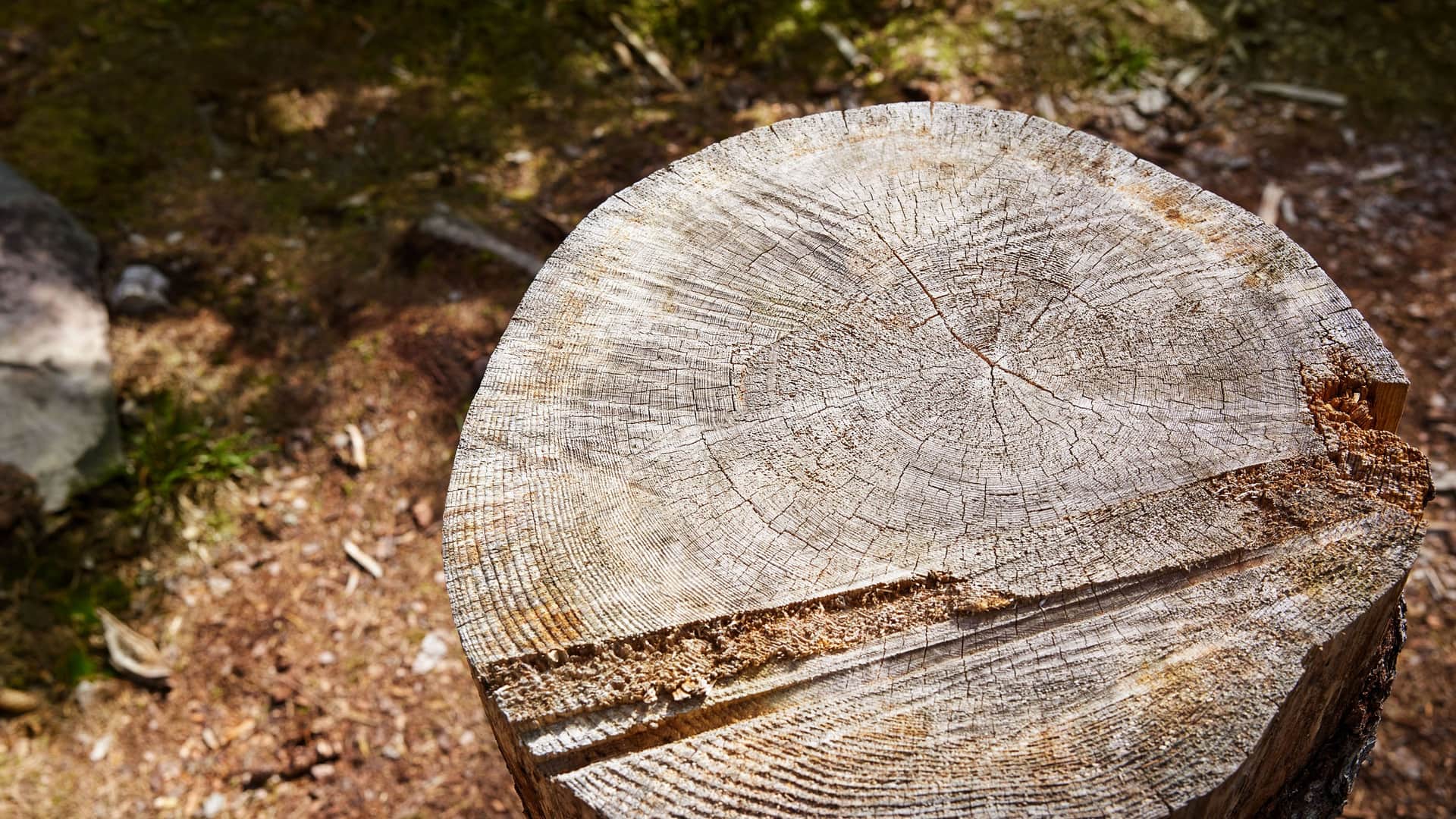
When comparing volume growth, people usually mean mean annual increment: the average growth in cubic meters over a rotation. The research results available largely concern uneven-aged management in spruce forests, which generally means a higher share of large trees. Most results show no difference between uneven-aged management and clearcut forestry, though some studies indicate lower volume growth under uneven-aged systems. In summary, if there is a measurable difference in volume growth between selective cutting and clearcut forestry, it’s likely not very large.
A key factor for volume growth in both multi-layered and single-layered management is how removals are done. In practice, removing the right trees—and not removing too much—is more important for strong growth than the choice of method itself or the exact remaining volume after harvest.
Can light-demanding species like pine be profitable in a multi-layered forest?
There is skepticism about managing toward a multi-layered forest dominated by pioneer species such as pine. One main reason is that pioneer species are more sensitive to shading from larger trees than secondary species such as spruce.
A counterargument is that by keeping the stand more open, young pines can get enough light to establish and grow. Studies in Finland suggest that a suitable density for a multi-layered pine forest is often around 5 m²/ha (basal area). That implies a fairly heavy selective cut, quite close to shelterwood and gap-cutting methods. This can mean some volume loss compared to growing a single-layer pine stand, but it can also enable much higher value production from the volume that is produced. Some studies report that systematically selectively cut pine forests produce 25% first-class sawlogs, compared to roughly 3–4% in forests managed with clearcut forestry. Also keep in mind that about 25% of volume produced in clearcut systems is removed as unprofitable thinning and clearing trees—far more than in a layered forest.
That said, much more research is needed on selective cutting in pine forests before this question can be answered conclusively. In general, you should be cautious about planning for fully multi-layered, single-species stands dominated by pioneer species. But you can confidently aim for a density that creates strong elements of pioneer species in the selectively cut forest.
Will the forest get “torn up” if large harvesters operate every ten years?
Selective cutting does mean that each harvested cubic meter of forest volume is transported a longer average distance compared to a final felling. Potential damage includes felling damage to remaining trees, soil compaction—especially during forwarding with a forwarder—and other root and stem damage caused by machinery. However, there is no general relationship between selective cutting and the amount of damage. In contrast, many studies show machine damage associated with the creation of clearcuts.
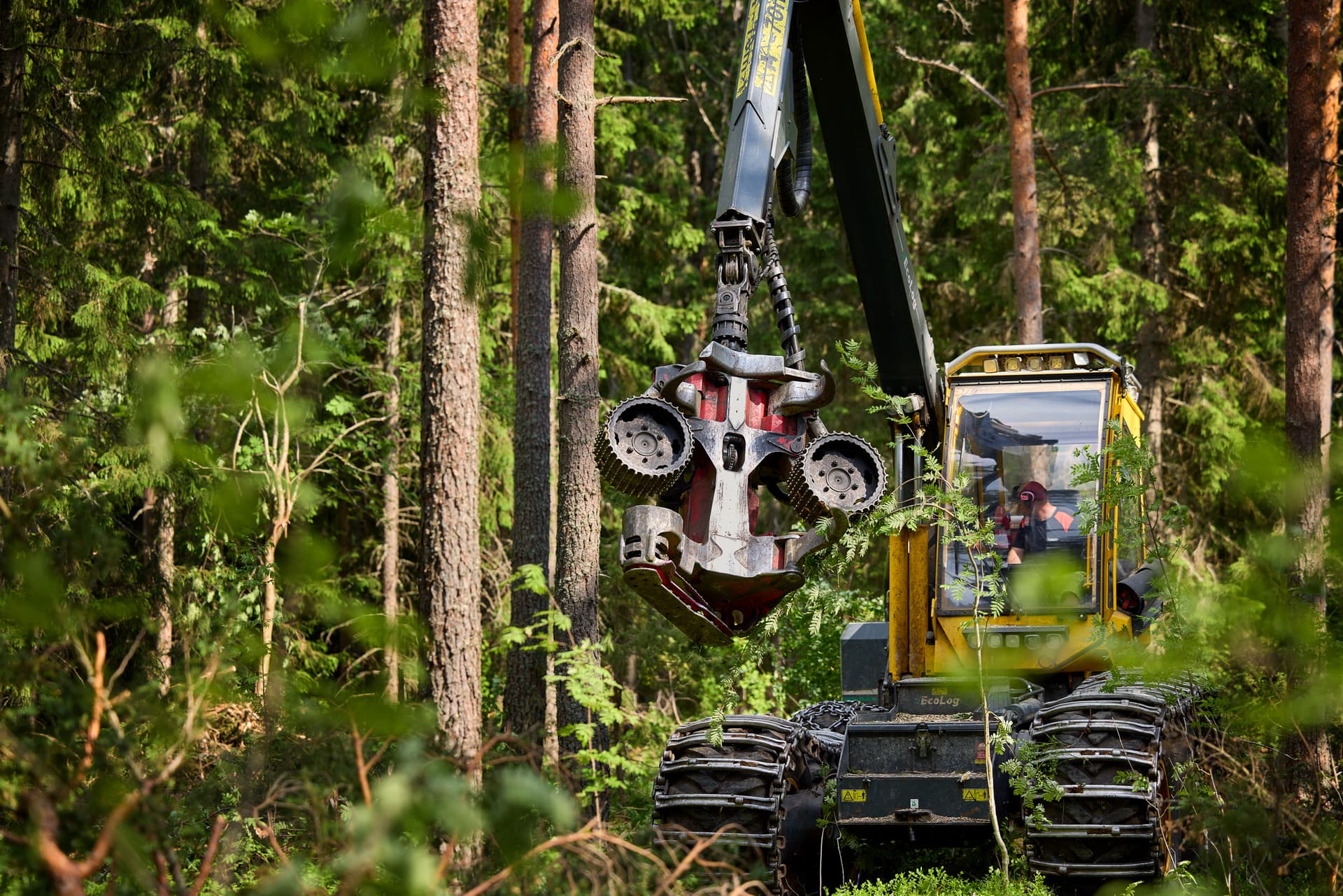
In reality, the risk of machine damage depends far more on the operator than on the management method. A poor operator can cause a lot of damage during selective cutting—just as in a standard thinning. Hiring skilled operators is essential, and they need reasonable working conditions. Piece-rate pay is often a poor fit for selective cutting. A skilled operator fells trees where they cause the least damage, lays enough slash when bearing capacity is low, and adapts loads to ground conditions. Also, a poorly managed forest with tall, dense trees will suffer more stem damage than a well-managed one. With good conditions, a professional operator should not cause stem damage to more than a few percent of the remaining trees, and machine trails should show no compaction.
There’s a common belief that selective cutting means “more interventions” in the forest. What’s often overlooked is that clearcut forestry with a standard management program also involves several machine interventions over a rotation: final felling, site preparation, two thinnings—and then the cycle repeats with a new final felling. In southern Sweden, with a rotation period (omloppstid) of 70 years, that’s one intervention every 14 years on average.
Does the risk of storm damage increase when the stand is opened up?
The risk of storm damage always increases when a stand is opened up, regardless of management system. However, a multi-layered stand harvested through selective cutting is significantly more windfirm than a single-layered stand managed under clearcut principles. During the transition period—when a stand shifts from single-layered to multi-layered—it can be more storm sensitive.
That said, there are several proactive ways to reduce risk. Depending on stand history and assessed risk, removal levels can be adjusted. The layout of extraction trails also matters—for example, by planning trails opposite the prevailing wind direction. Hyggligt accounts for these factors in harvest planning for continuous-cover harvests.
Can you transition a single-layer stand to a multi-layer, continuous-cover system?
Yes—single-layer stands can be transitioned to multi-layered structures. Hyggligt’s tree-selection algorithms enable this by sizing removals so the forest is opened gradually over time. Gradual opening—spreading interventions out—helps limit storm sensitivity. The younger and better-thinned the forest is, the faster the transition period tends to be. We set removal limits of 30% for spruce and 40% for pine. How long it takes—and what the economics look like during the transition—also depends on the starting structure. Most stands have some diameter variation even when trees were planted at the same time, and it becomes important to maintain and expand that variation.
If a forest is old and dense, transitioning is more challenging—and it may no longer be justifiable on profitability grounds alone. Hyggligt can help you determine whether a stand has passed the point where a transition is economically motivated.
Centered selective cutting with Hyggligt
Whatever your goals are, there are good reasons as a forest owner to consider selective cutting. Curious what centered selective cutting with Hyggligt could mean for you and your forest? Contact us or go to Calculate your forest and enter your details—we’ll get back to you with an estimate of what it could mean financially, and answer your questions.