Transition to continuous-cover forestry
Transitioning from clearcut forestry (trakthyggesbruk) to continuous-cover forestry (hyggesfritt skogsbruk) is possible in all types of production forests. Some stand structures carry a higher risk of damage and require more caution than others—but many forests can transition with limited risk.
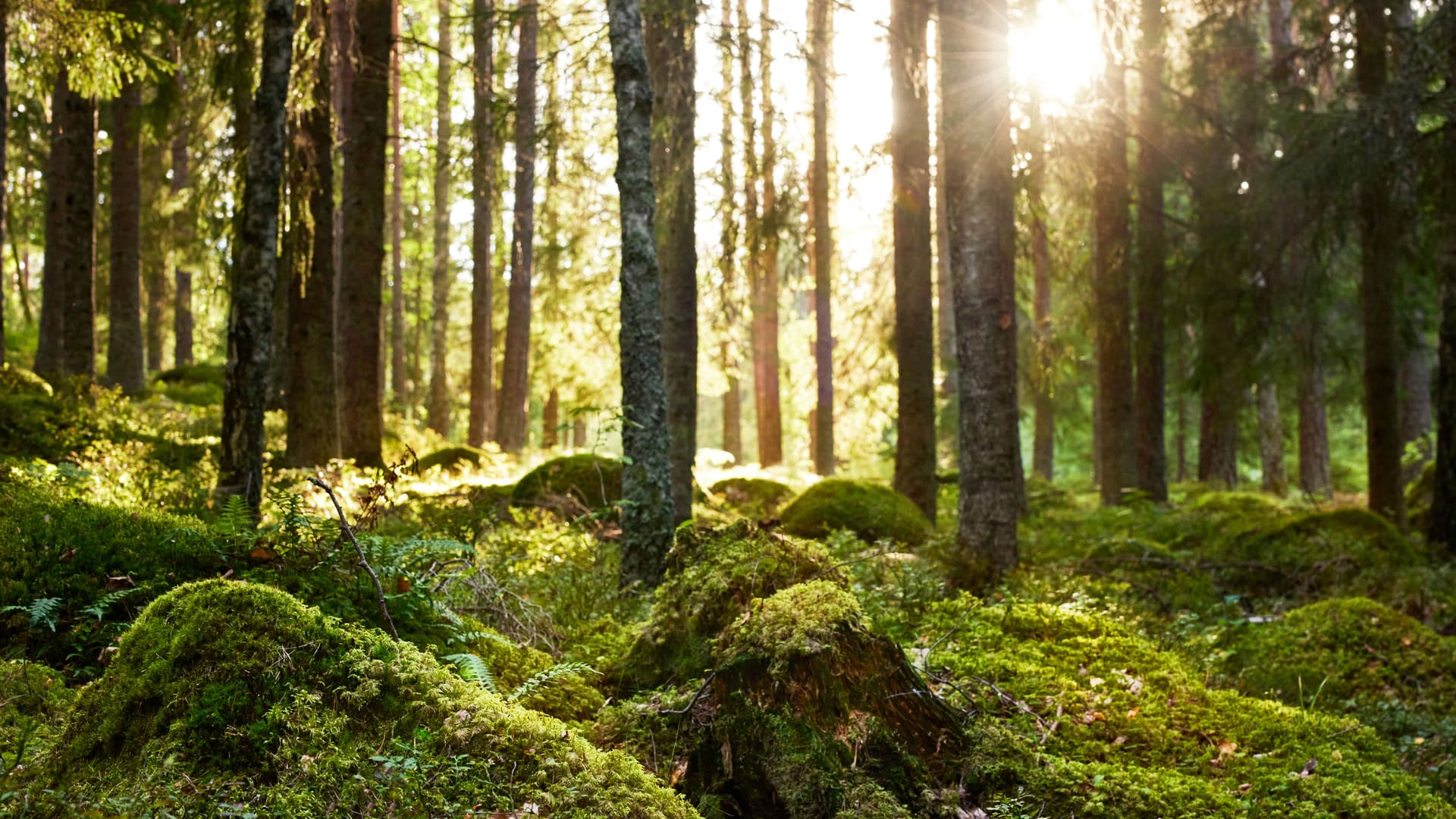
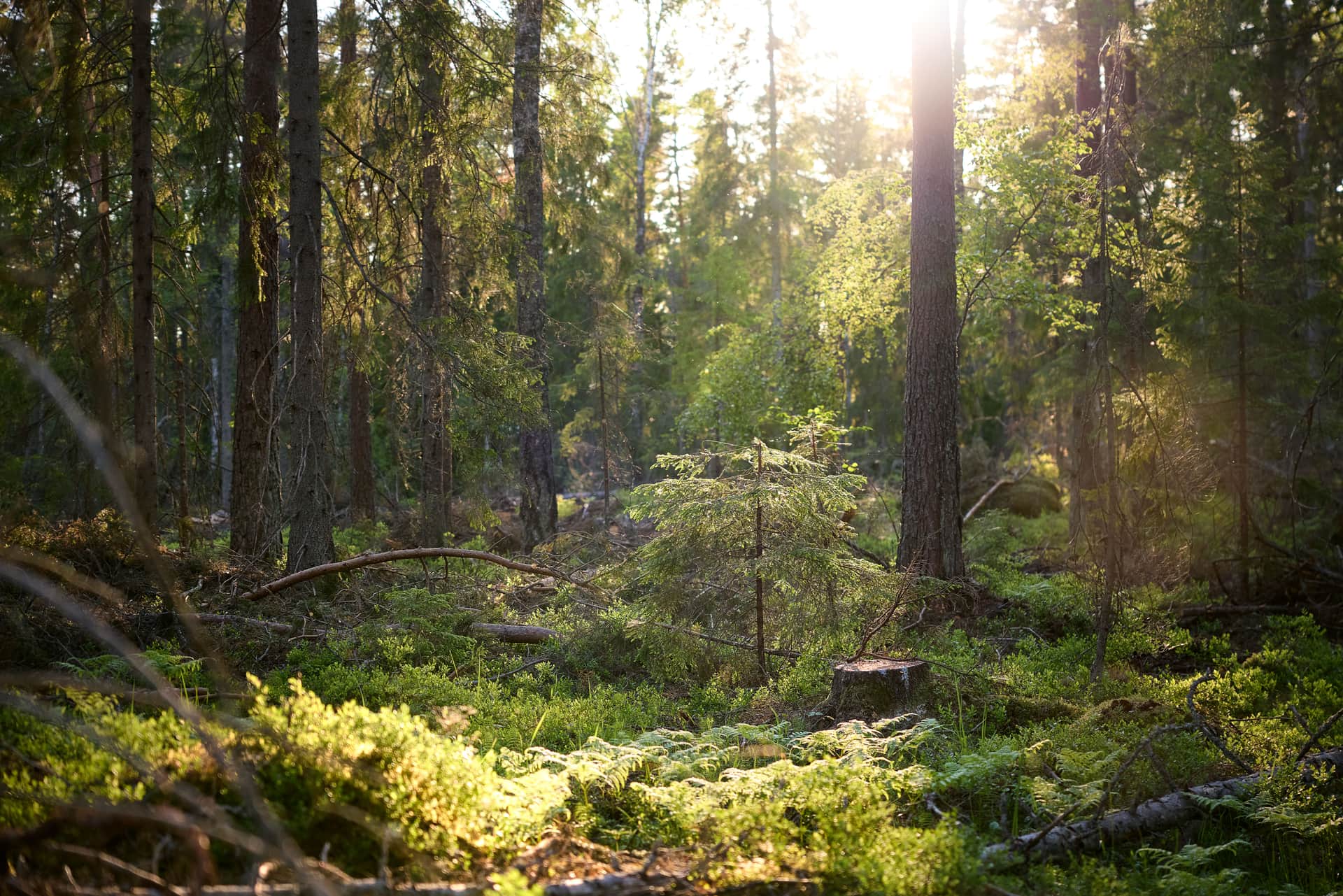
When forests are allowed to develop undisturbed, without human intervention, they tend over time to become more diverse and multi-layered. That’s why transitioning a traditionally managed forest to a multi-layered structure is, in many ways, a very natural process.
What do we mean by continuous-cover forestry?
There are several different continuous-cover silvicultural approaches that don’t necessarily have much in common. When we talk about “transitioning to continuous-cover forestry,” we’re referring to a form of continuous-cover management (kontinuitetsskogsbruk) where the forest develops toward a fully multi-layered forest—a stand with trees in all size classes. This is in contrast to the single-layered stands typical of clearcut forestry, where trees are roughly the same height.
With the Hyggligt concept, we use centered selective cutting (centrerad plockhuggning) together with drones, tree-selection algorithms, and digital tools to make the transition as cost-effective and long-term sustainable as possible.
Potential risks
When a forest develops without human intervention, it tends over time to become more varied and multi-layered. So the shift toward continuous-cover forestry is natural in itself. But depending on the forest’s current condition, special measures may sometimes be needed to reduce risks.
In traditional clearcut forestry (kalhyggesbruk), trees often grow densely, are about the same age, and therefore develop slender stems, small crowns, and smaller root systems. If such trees are “released” too quickly—without support from surrounding trees—the risk increases that they break under heavy wet snow or blow down in storms. By giving them gradually more growing space, they have time to strengthen their stems, expand their crowns, and develop more stable root systems.
The denser, taller, and more even-aged the trees are, the more cautiously the transition must be done. In practice, it’s about balancing damage risk against temporarily accepting lower short-term returns. But with the right expertise and well-considered harvesting decisions, any forest can be transitioned to sustainable continuous-cover management.
Which stands are best suited?
Most production-focused stands have good enough conditions to begin a transition. The best suited are mature stands nearing final harvest where there is already some understory or layering. This also includes younger, actively managed forests where trees have long live crowns—often a sign the trees are robust enough to handle increased exposure.
In general, most stands can start transitioning with a harvest that removes around 30% of the stand’s basal area.
Hyggligt helps you transition
With the Hyggligt concept, we help you transition to continuous-cover forestry in a way that’s both profitable and sustainable over the long term. We combine modern technology—like drones, optimized tree-selection algorithms, and digital planning tools—with the research-based harvesting method centered selective cutting.
Your net at harvest (per hectare)
0 SEK*
*The harvest net is not a guaranteed figure. The calculation is based on a healthy spruce-dominated forest in southern Sweden.
Estimate your forest
Want a more precise estimate based on your forest? Click the button below and fill in details about your stand, and we'll get back to you with an estimated harvest net.
Estimate your forestContact us and we’ll tell you more about how we can help
- Email: hej@hyggligt.se
- Phone: +46 73-850 46 75