What is continuous-cover forestry?
Continuous-cover forestry (hyggesfritt skogsbruk) is an umbrella term for forest management where the land stays tree-covered—without large clearcut areas—unlike clearcut forestry (trakthyggesbruk), Sweden’s traditional forestry system.
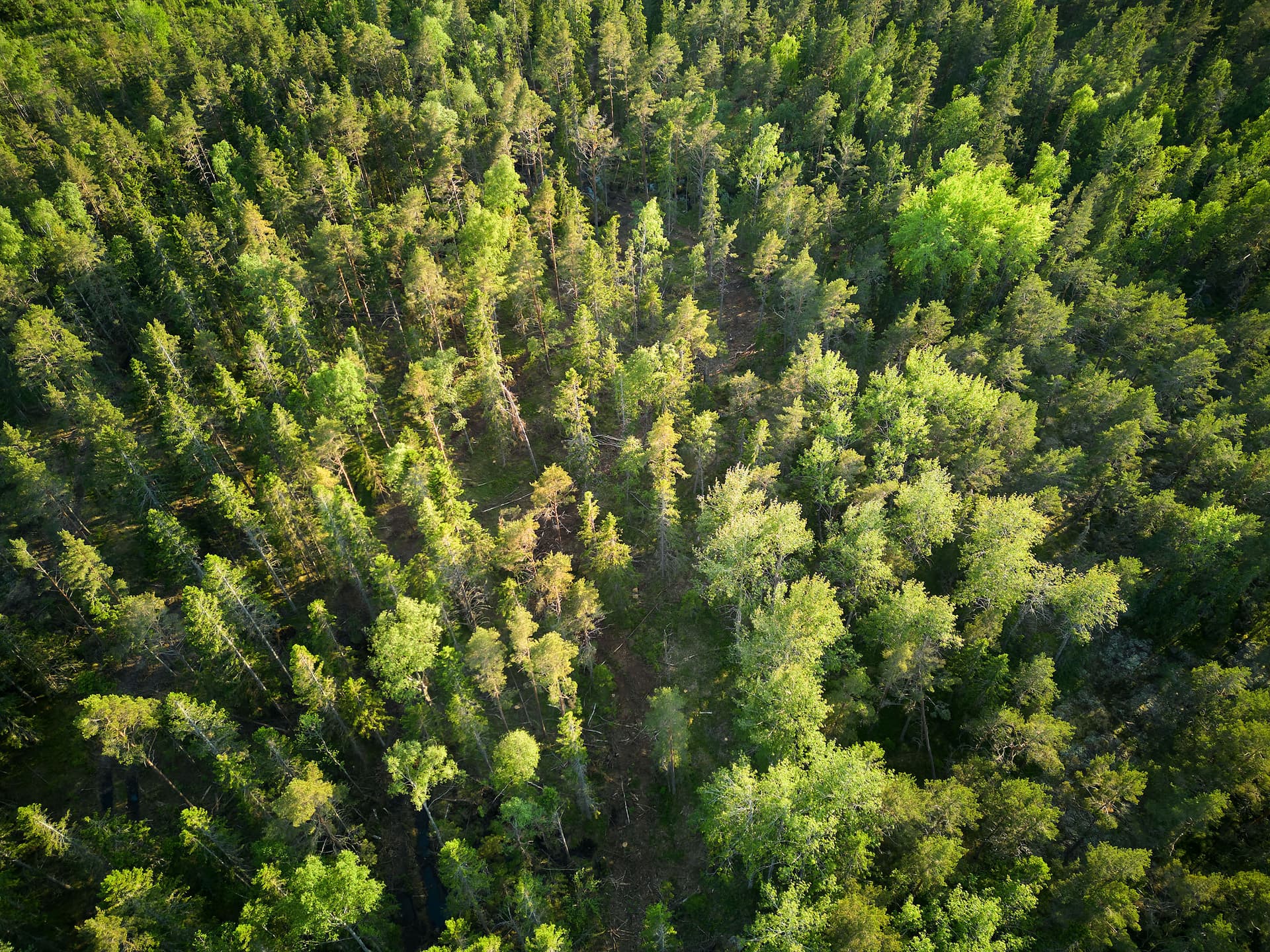
“Continuous-cover” covers a wide range of methods—from gap cutting (luckhuggning) and shelterwood retention (överhållen skärm) to selection systems like uneven-aged management (blädning) and selective cutting (plockhuggning). These methods don’t necessarily have much in common beyond avoiding large clearcuts.
Different continuous-cover methods
Uneven-aged management (blädning)
A harvesting method where the ground remains tree-covered and the goal is to create or maintain a fully multi-layered forest. In such forests, trees exist in every height class—from small seedlings to large trees—distributed across the whole stand. There are many more small trees than large trees.
Uneven-aged management is facilitated by relatively high standing volume. The interval between harvests varies with site productivity but is typically 10–30 years. Removals are usually 20–30% of the total standing volume.
Gap cutting (luckhuggning)
A harvesting method where the forest is cut in small gaps with diameters of 25–50 meters. After harvesting, these gaps are allowed to regenerate naturally through natural regeneration.
Whether gap cutting is truly “continuous-cover” can be debated, since the gaps can effectively function like small clearcuts.
Shelterwood retention (överhållen skärm)
A regeneration method where the stand is thinned, and the remaining trees form an overstory of large trees. New trees establish and grow under that cover; once they are established, the overstory is gradually removed. Compared with, for example, seed-tree systems, this keeps the ground more tree-covered, and the retained trees are kept for much longer than in traditional shelterwood management.
Shelterwood retention can be used in single-layered stands. To count as a continuous-cover method, at least 25 large trees per hectare should be retained, and the overstory should not be removed before younger trees are established.
Selective cutting (plockhuggning)
A harvesting method where scattered individual trees are removed across the forest. Removals usually target trees with specific characteristics or trees above a certain diameter. Harvests are often relatively small, which over time can result in a multi-layered forest with varied tree sizes and ages.
Harvest with centered selective cutting at Hyggligt
Hyggligt’s harvesting method is called centered selective cutting (centrerad plockhuggning), designed to optimize tree selection for profitability. Learn more about the Hyggligt concept and how we support forest owners and managers through digital forest inventory and analysis, digital harvest planning tools, and harvesting contracts.
Whatever your goals are, there are good reasons as a forest owner to consider continuous-cover methods and selective cutting. Curious what centered selective cutting with Hyggligt could mean for you and your forest? Contact us—we’d be happy to talk it through.
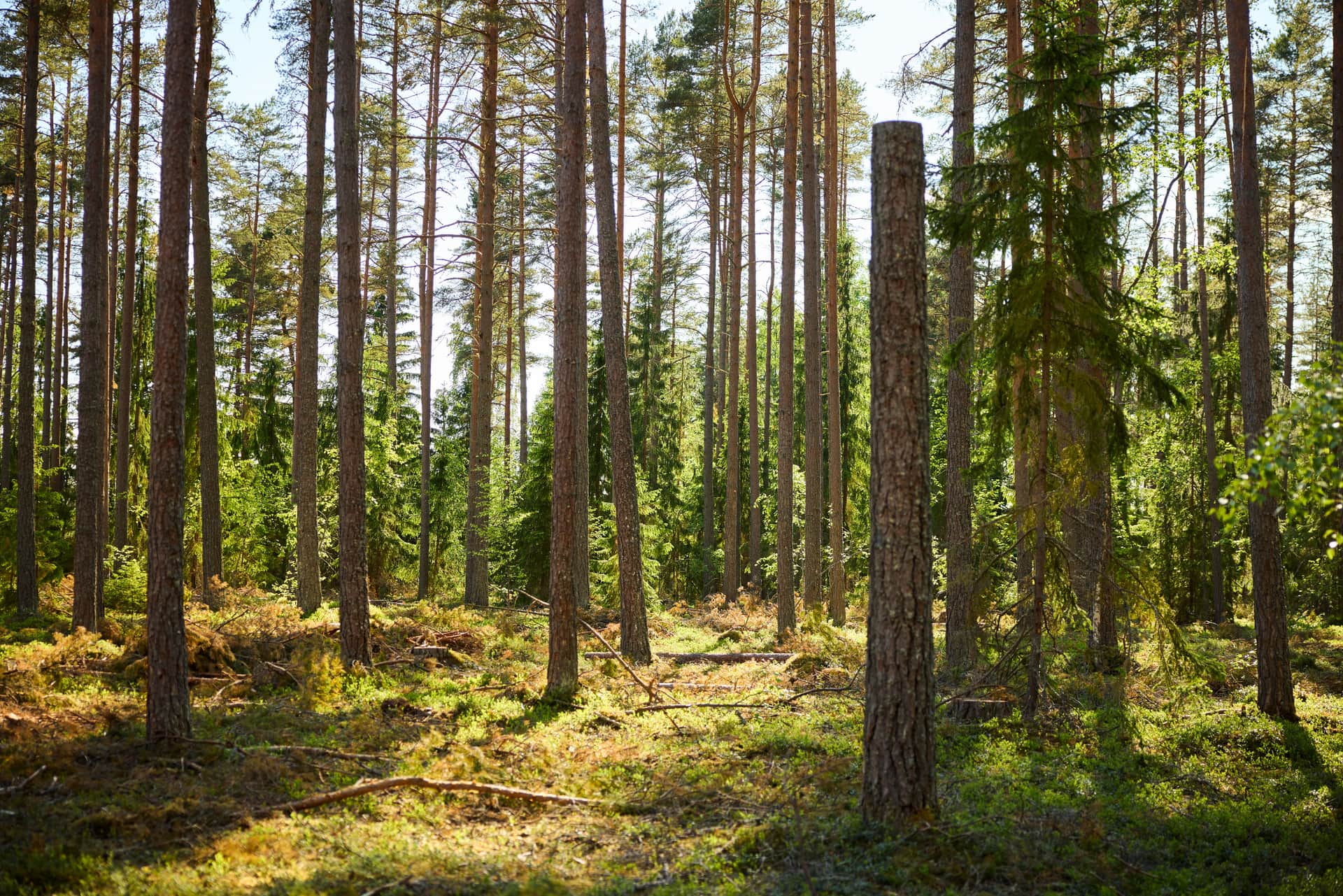
What is centered selective cutting?
Centered selective cutting (centrerad plockhuggning) is a form of crown thinning where harvesting decisions are tailored to each individual tree. It’s part...
3 min read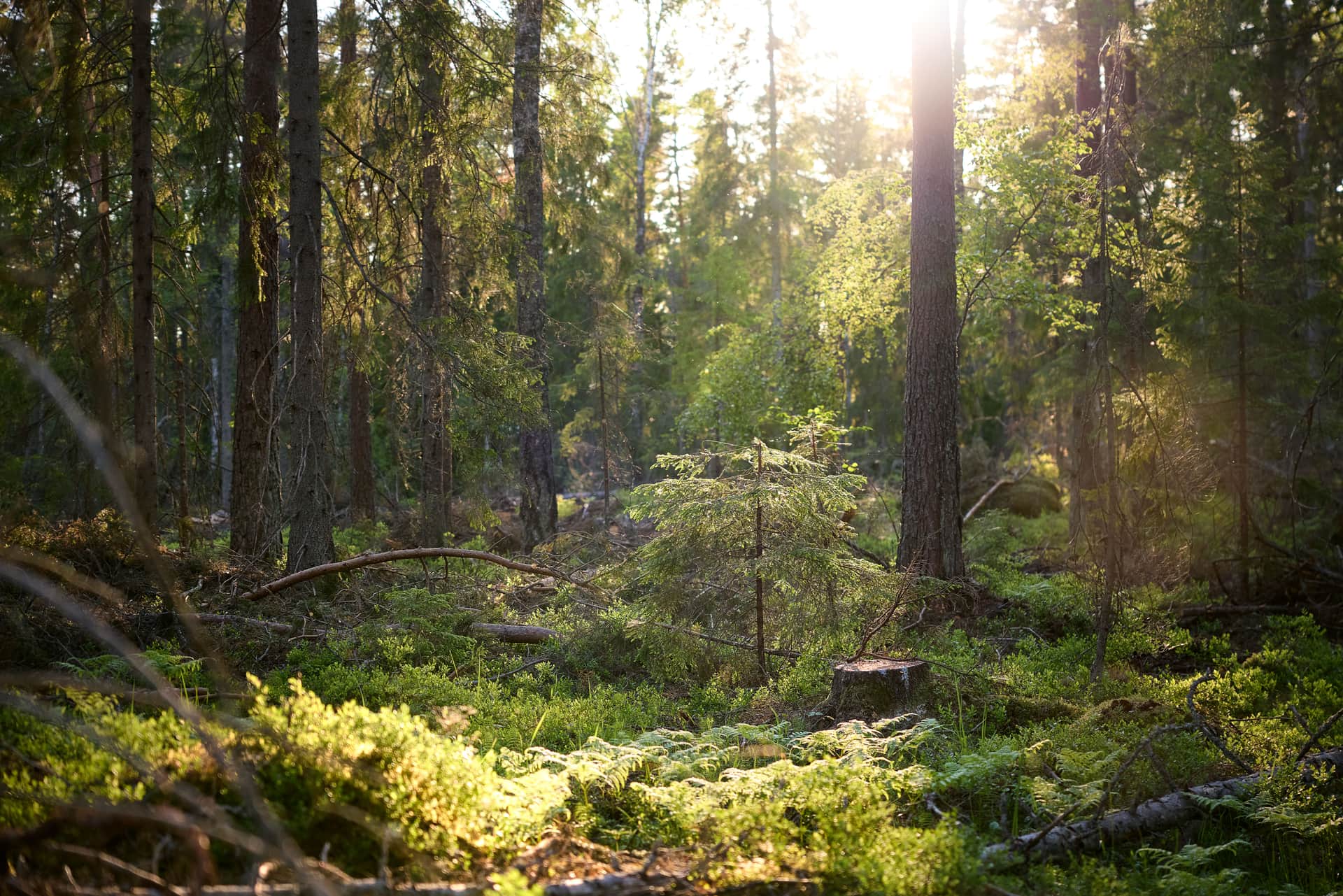
FAQ: selective cutting and continuous-cover forestry
Continuous-cover forestry (hyggesfritt skogsbruk) is attracting growing interest among forest owners—but also questions and misconceptions. What does selec...
6 min read
5 financial benefits of harvesting with continuous-cover forestry—using Hyggligt
Erik shares five financial benefits of the Hyggligt Method and explains how continuous-cover forestry (hyggesfritt skogsbruk) can improve forestry profitab...
4 min read
Strong net income for the forest owner from the very first selective harvest
Continuous-cover harvests can generate significant income for forest owners. This is shown by the selective harvest Hyggligt carried out in fall 2023 on a ...
2 min readYour net at harvest (per hectare)
0 SEK*
*The harvest net is not a guaranteed figure. The calculation is based on a healthy spruce-dominated forest in southern Sweden.
Estimate your forest
Want a more precise estimate based on your forest? Click the button below and fill in details about your stand, and we'll get back to you with an estimated harvest net.
Estimate your forest