5 financial benefits of harvesting with continuous-cover forestry—using Hyggligt
Erik shares five financial benefits of the Hyggligt Method and explains how continuous-cover forestry (hyggesfritt skogsbruk) can improve forestry profitability.

Many people see continuous-cover forestry (hyggesfritt skogsbruk) as labor-intensive and unprofitable. As an individual forest owner, it can feel difficult to manage your forest using continuous-cover methods. Part of it is a knowledge gap in Swedish forestry, and part of it is that the workflow differs from traditional methods.
But when continuous-cover forestry is done the right way, there are many financial advantages compared with clearcut forestry (trakthyggesbruket). In many cases, we believe it becomes significantly more profitable for the forest owner. With Hyggligt, it also becomes simpler.
Here are five financial benefits of managing your forest with Hyggligt and our method for continuous-cover harvesting: the Hyggligt concept.
1. More timber in higher-paid assortments
The Hyggligt Method accounts for a calculated maturity diameter (mogendiameter) and ties harvest volume to current timber prices, focusing on better-paid log dimensions. That means every tree in the stand is evaluated: is it most profitable to harvest it today, or to leave it and let it grow larger until the next harvest?
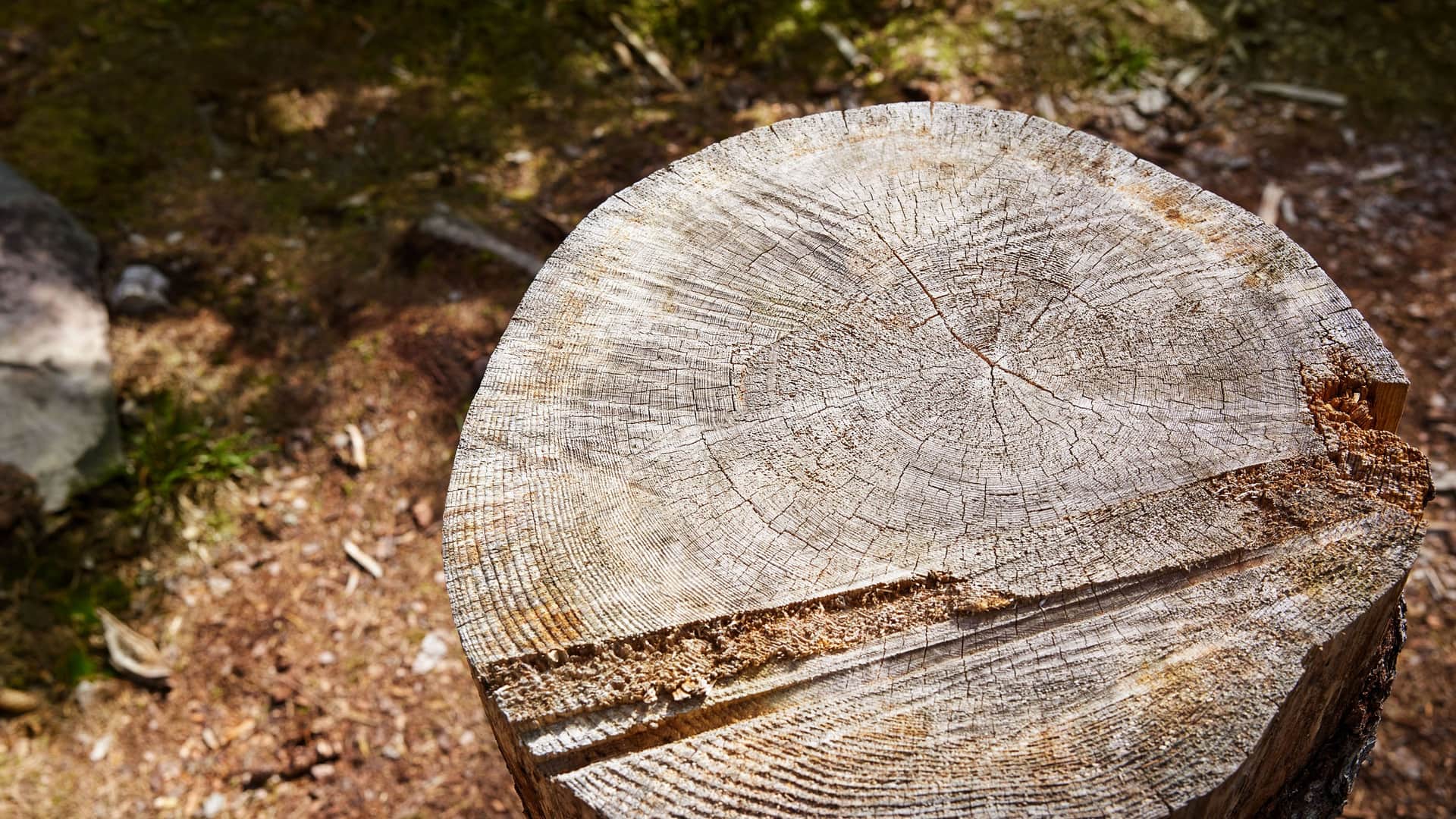
Trees in continuous-cover stands are often larger-diameter than those in traditionally managed forests. Harvesting larger trees means a higher share of the harvested volume can be sold as sawlogs, which pays more. Timber is also priced by quality—for example, pine forests managed with continuous-cover methods can deliver 25% first-grade sawlogs, compared with 2–3% in clearcut-managed forests.
Focusing harvest volume on higher-paid assortments also means the machine operator doesn’t spend costly time felling trees that won’t pay well anyway—which connects to the next benefit.
2. Lower operations and silviculture costs
There’s a common perception that continuous-cover harvesting takes longer than traditional harvesting. But by definition, continuous-cover forestry harvests a smaller volume at any one time, which means the time spent on operations (drivning)—machine work in the forest—decreases.
That said, continuous-cover harvesting is more complex. That’s why we’ve developed tools for harvester operators that simplify the work. With Hyggligt, operations are optimized because the operator knows the tree selection ahead of time and has in-cab tools in the harvester (skördaren) that visualize the trees to be harvested on a screen. We’re also developing tools to optimize routes and skid trails (stickvägar) in advance.
Silviculture costs—site preparation, planting, and precommercial thinning (röjning)—often disappear entirely with continuous-cover forestry, because the forest regenerates naturally through natural regeneration (självföryngring). Costly thinnings can also become less necessary, since competing trees are continuously removed during harvests with the Hyggligt Method.
Profitability increases in part because interventions in the forest are minimized.
3. Preserved property value
The market value of a forest property depends on many factors, including the land’s production capacity, standing volume (virkesförråd), and road network.
When you carry out final felling (slutavverkningar) under clearcut forestry, the property’s value can drop sharply because the forest disappears and standing volume shrinks. On a property managed with continuous-cover methods, the average standing volume is generally higher than on a clearcut-managed property. With continuous-cover forestry, much of the forest remains—and the property retains value even if parts of the stand have been harvested.
Over the past 10 years, both property values (measured in SEK per m3sk) and timber prices have steadily increased. That means forest owners using continuous-cover methods have been able to sell timber at better and better prices—while also seeing their property value rise significantly.
4. A steadier flow of income
With continuous-cover forestry, recurring harvests are a natural part of management—so income becomes recurring too. Harvests typically happen at 10–15-year intervals, compared with final fellings in clearcut forestry, which occur at intervals of at least 70–100 years.
In other words, forest owners get income from their forest far more often when they use continuous-cover methods, which reduces several financial risks. Timber prices can fluctuate significantly. By harvesting with continuous-cover forestry and selling timber more frequently, you spread risk tied to timber prices, inflation, and high operations costs. Continuous harvesting can also reduce risk related to pest damage.
5. Better use of ecosystem services
The benefits forests provide to society are called ecosystem services (ekosystemtjänster), and they include everything the forest can contribute. Today, the forest’s full potential often isn’t utilized, because timber production is usually prioritized above all else. It’s relatively straightforward for a forest owner to value a forest and get paid for it in timber terms—but it’s much harder to get compensation for, and to value, other ecosystem services.
When forests are managed with clearcut methods, the result is that timber volume production is favored while other ecosystem services are disadvantaged. With continuous-cover forestry, opportunities open up for alternative income streams—for example carbon credits through carbon sequestration, increased food production, recreation, and tourism. What these ecosystem services have in common is that they depend on biodiversity to some extent.
Continuous-cover forestry with Hyggligt
No matter what matters most to you as a forest owner, there are good reasons to try continuous-cover methods. Curious what Hyggligt could mean for you and your forest? Go to Run the numbers for your forest and submit your details—we’ll get back to you with an estimate of what it could mean financially. You can also contact us directly.
Your net at harvest (per hectare)
0 SEK*
*The harvest net is not a guaranteed figure. The calculation is based on a healthy spruce-dominated forest in southern Sweden.
Estimate your forest
Want a more precise estimate based on your forest? Click the button below and fill in details about your stand, and we'll get back to you with an estimated harvest net.
Estimate your forestHow Hyggligt works
With us you get help with everything. An economically optimized continuous-cover harvesting plan, the harvest itself, and the sale of the timber. A hygglig all-in-one solution.
Subscribe to our newsletter