Lower logging and silviculture costs
Hyggligt’s continuous-cover forestry method (hyggesfritt skogsbruk) minimizes machine driving in the forest—and thus logging costs (drivningskostnader). It also reduces silviculture costs, since the forest regenerates naturally.
Hyggligt’s approach to continuous-cover forestry—Hyggligtmetoden—minimizes machine driving in the forest, i.e. the costs of logging operations (drivning).
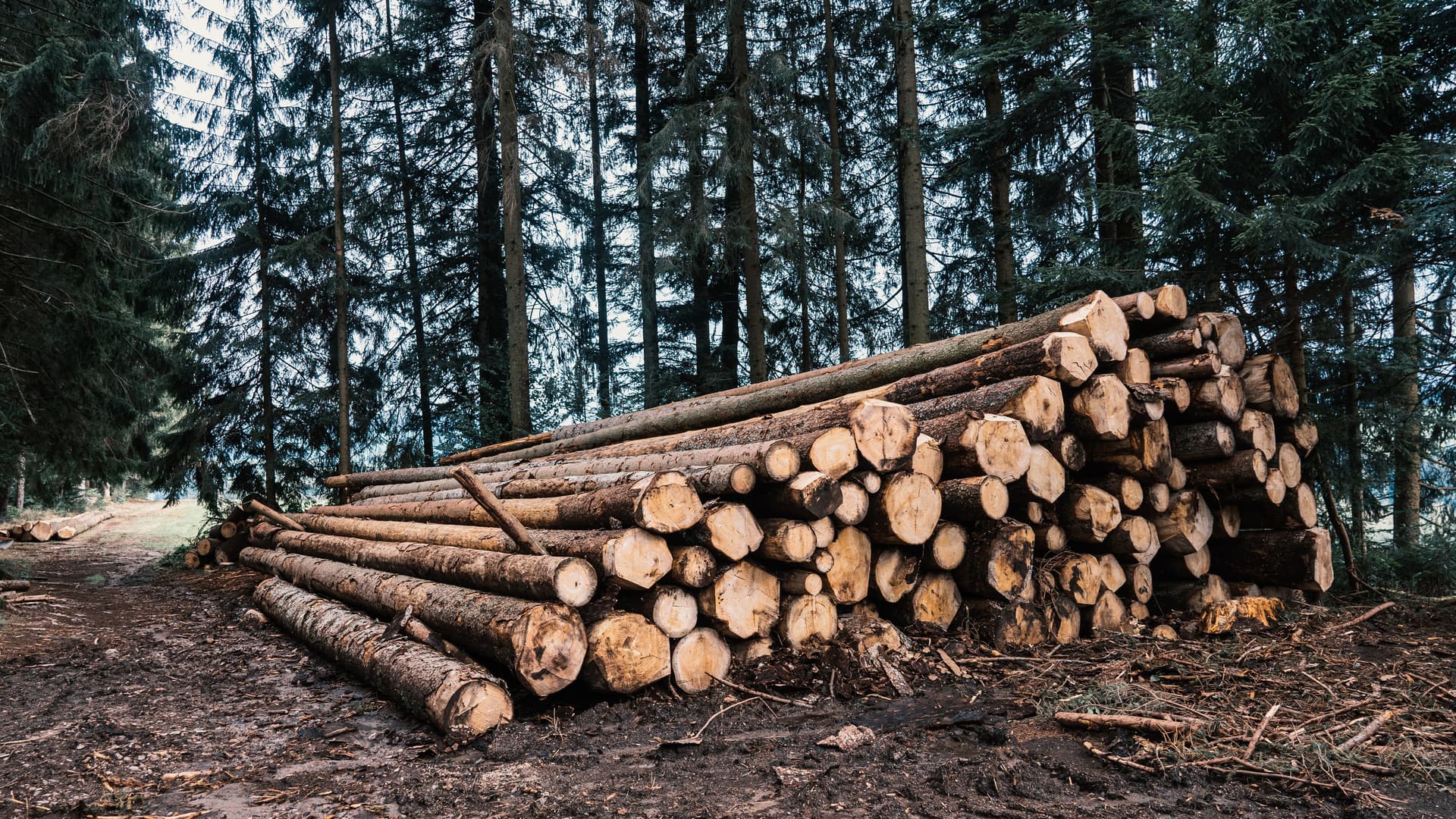
The misconception that logging costs are higher in continuous-cover forestry
There’s a common perception that continuous-cover harvesting takes longer and is harder than traditional clearcutting. In clearcut forestry, logging costs (harvesting costs) are often reported per m3fub (solid cubic meter under bark), which means that when a larger harvested volume is used to divide the total cost, the cost per m3fub looks lower.
Using that accounting method, logging costs are often presented as higher in continuous-cover forestry. But by definition, continuous-cover systems do not remove the same volume in one operation. That also means the time spent harvesting is lower. And that calculation typically doesn’t include silviculture costs—such as the legal obligation to replant after clearcutting.
Hyggligt’s tools for harvester operators
That said, it’s important to note that continuous-cover harvesting is more complex. That’s why we’ve developed tools for harvester operators that simplify operations according to Hyggligtmetoden.
With Hyggligt, logging operations are optimized because the harvester operator knows the tree selection in advance and has field tools that clearly visualize which trees to cut on a screen. Operators can also review the operation for planning on a computer, tablet, or using VR goggles. We’re also developing tools to optimize driving routes and extraction trails in advance.
Lower silviculture costs
Silviculture costs—planting, site preparation, and pre-commercial thinning—drop sharply in continuous-cover forestry. One reason is that the forest regenerates naturally through natural regeneration (självföryngring). In many cases, that means planting, site preparation, and clearing aren’t needed at all.
The costly thinnings common in clearcut forestry are also less necessary, because competing trees are removed continuously as part of continuous-cover harvests. Profitability is increased in part by minimizing interventions rather than pushing maximum production.
Lower total costs
Overall, Hyggligtmetoden can significantly reduce total forestry costs over a traditional rotation period (omloppstid) (around 70–100 years in Sweden) compared with clearcut forestry. This is achieved through optimized removals, tree selection, and trail layout—combined with operator support tools in the field.