Data and AI are the key to continuous-cover forestry at scale
With precision data and optimized tree selection, continuous-cover forestry (hyggesfritt skogsbruk) becomes both simple and efficient. We break down today’s challenges—and why data, AI, and the Hyggligt Method are the solution for selective logging (plockhuggning) at scale.
As demand grows for timber as a sustainable resource, the forestry sector faces increasingly complex challenges. Swedish forests need to become more sustainable—while timber production also needs to increase. At the same time, interest in continuous-cover forestry (hyggesfritt skogsbruk) is rising quickly, with sustainability and biodiversity at the center.
In the public debate, timber production and forestry efficiency are often framed as being at odds with continuous-cover forestry. We think that’s simply wrong. It’s absolutely possible to capture a forest’s production potential with continuous-cover methods—if it’s done the right way. We call our solution the Hyggligt concept.
To achieve economic profitability at scale—on par with clearcut forestry (kalhyggesbruket)—you need high-quality harvesting decisions. The right trees must be harvested to maximize future growth, but doing that requires deep expertise. So how do you make optimal harvesting decisions for timber production—and why do you need data and AI to do it?
The challenges with continuous-cover forestry today
In recent years, continuous-cover forestry has grown sharply in popularity in Sweden. More forest owners have become interested in alternative management methods, and in December 2023 the Swedish Environmental Protection Agency (Naturvårdsverket) and the Swedish Forest Agency (Skogsstyrelsen) proposed that the Swedish state should lead the way on continuous-cover forestry.
But managing a forest with continuous-cover methods isn’t frictionless. In Sweden there’s still a knowledge gap around these approaches, and the workflow differs from traditional clearcut forestry, where actions are decided at the stand level. In continuous-cover forestry—and in selective logging (plockhuggning)—decisions are made at the tree level. That requires detailed insight into the forest, and ideally every tree in the stand should be measured and analyzed. It’s therefore natural that continuous-cover forestry is harder to apply and more labor-intensive today.
Another common—but incorrect—assumption is that efficiency and growth are worse in continuous-cover stands. Research is increasingly showing the opposite. When continuous-cover harvests are carried out correctly, profitability is often higher for the forest owner compared with clearcut forestry.
The solution: Optimized tree selection with the Hyggligt Method
If you solve the challenges above, there are suddenly few barriers to continuous-cover forestry and long-term profitability. That’s where data and technology come in. With data and analysis for every tree, optimized tree selection during harvesting, and operator tools for harvesters, we at Hyggligt tackle the hardest parts of managing forests with continuous-cover methods. Instead of being complicated and labor-intensive, forestry becomes simple and efficient. We call it the Hyggligt Method.
Precisionsdata med laser (LiDAR)
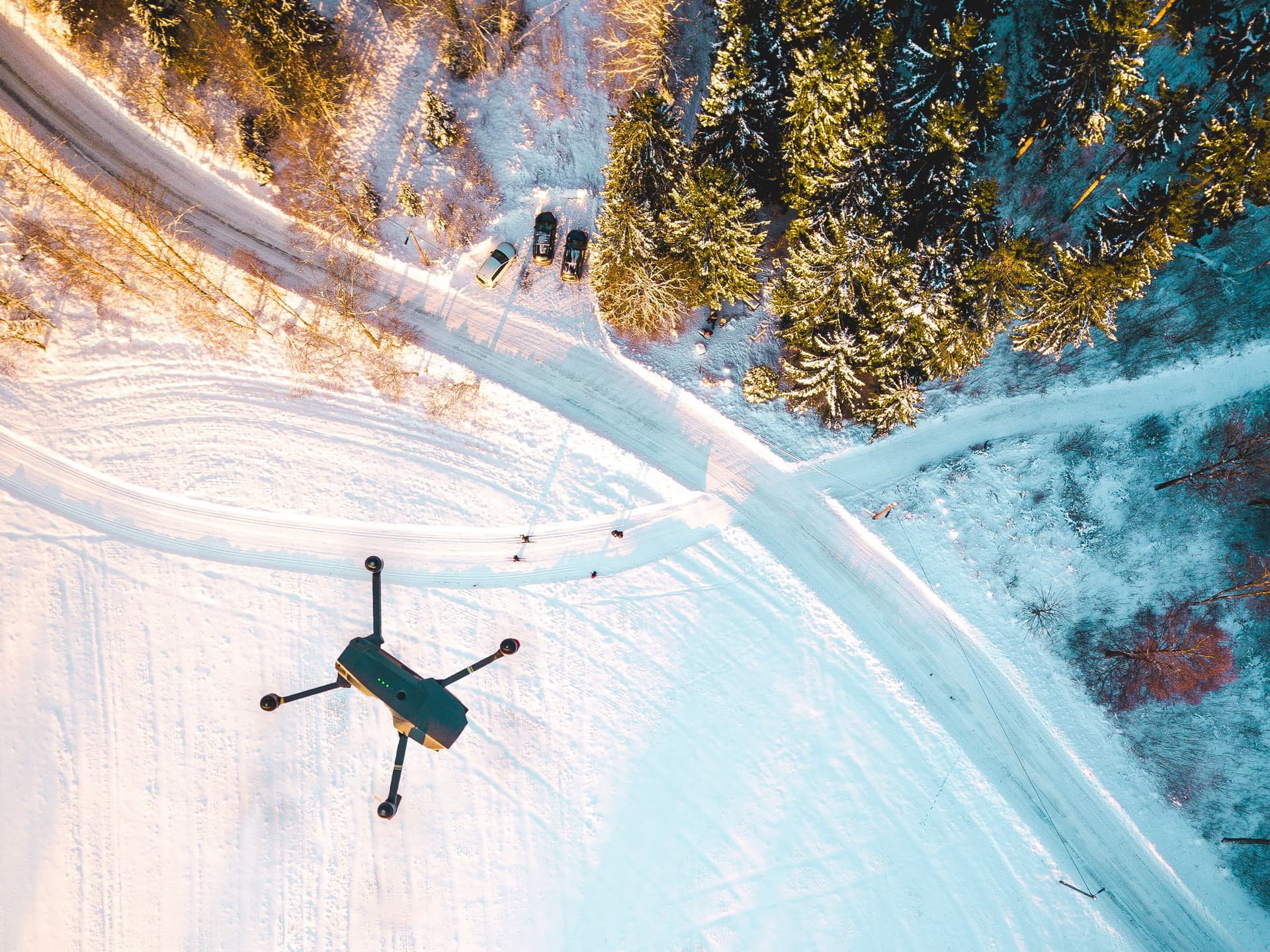
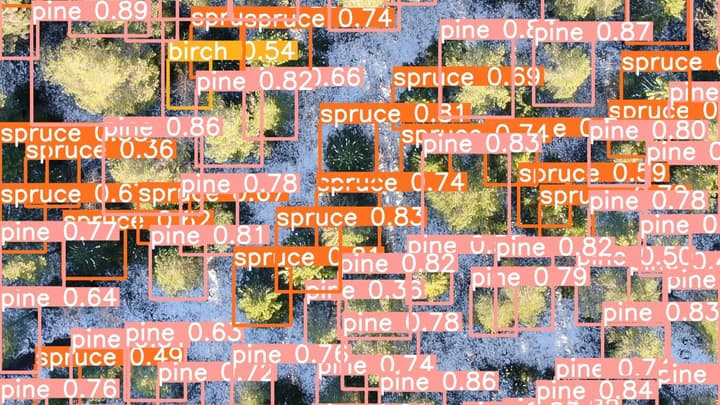
Using drones and LiDAR, we scan every tree from above and collect data about its characteristics. After collection, the data is analyzed. Among other things, our analysis produces each tree’s position, height, timber volume, species, and vitality.
Tree-level harvesting decisions
Once we have data for each tree, our optimization model decides which trees should be harvested. The model considers many parameters, but it’s grounded in estimating trees’ competition for resources and growth—something you have to master to maximize a forest’s timber production.
Mature trees are then selected through precision harvesting, while smaller trees are left to grow until the next harvest. The selection is tailored to maximize volume growth and economic profitability—both short term and long term.
Visualization tools during harvesting
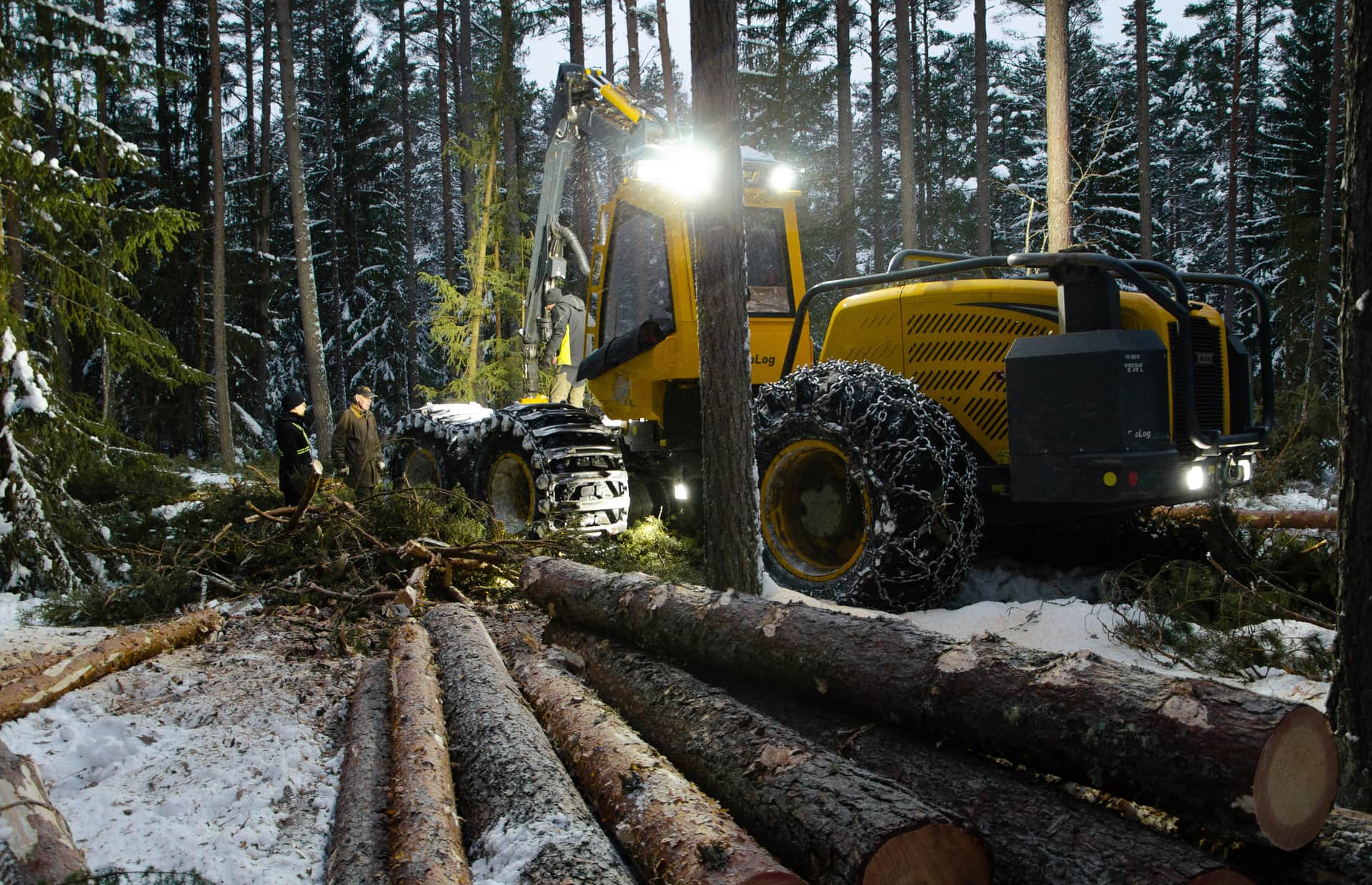
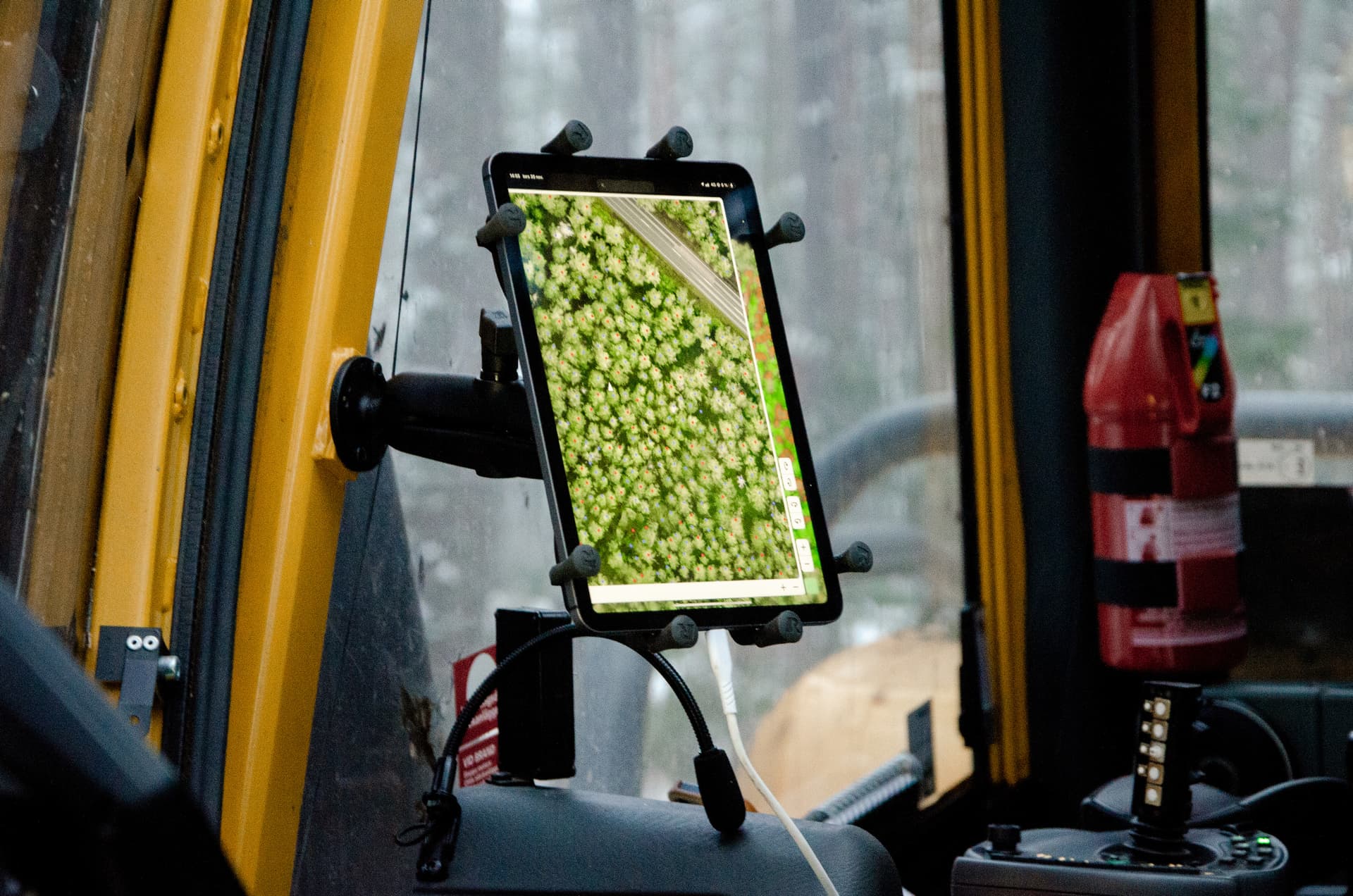
With Hyggligt, operations (drivning) are optimized by giving the harvester operator access to visualization tools during the harvest. The entire stand and the trees to be harvested are visualized in a 3D map tool. The operator can also review the harvesting plan on a computer, tablet, or with VR glasses ahead of time for planning.
In summary
We see large-scale selective logging (plockhuggning) as a solution for the future. Continuous-cover forestry delivers greater overall benefits than clearcut forestry, and when it’s done right—with optimized tree selection—the conditions are there to increase profitability for the forest owner and meet growing demand for timber. All while biodiversity increases and climate emissions decrease.
With our one-of-a-kind method, the solution is already here today. The Hyggligt concept removes the barriers and makes continuous-cover forestry profitable, accessible, and simple. A “hyggligt” way of forestry for the future.