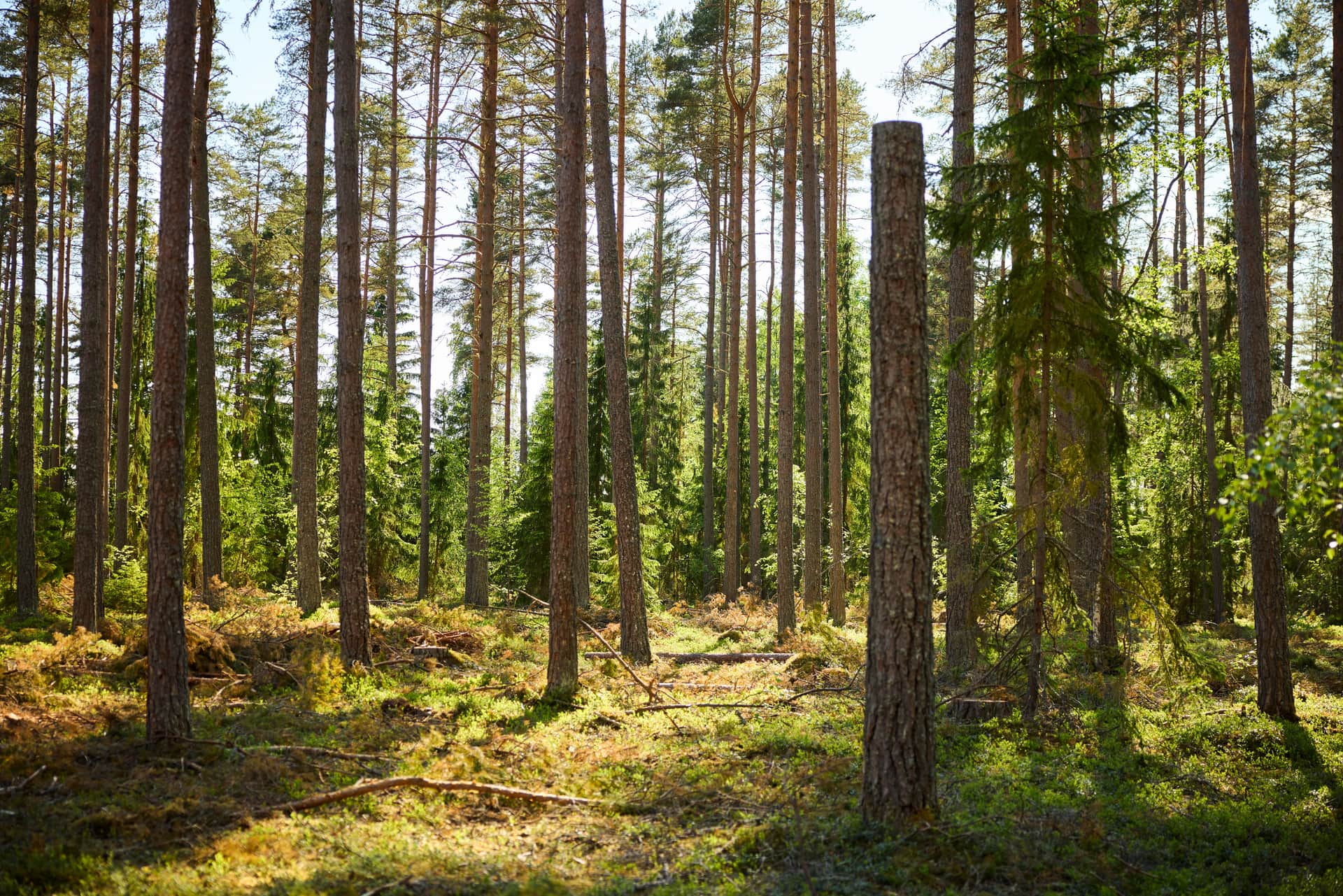
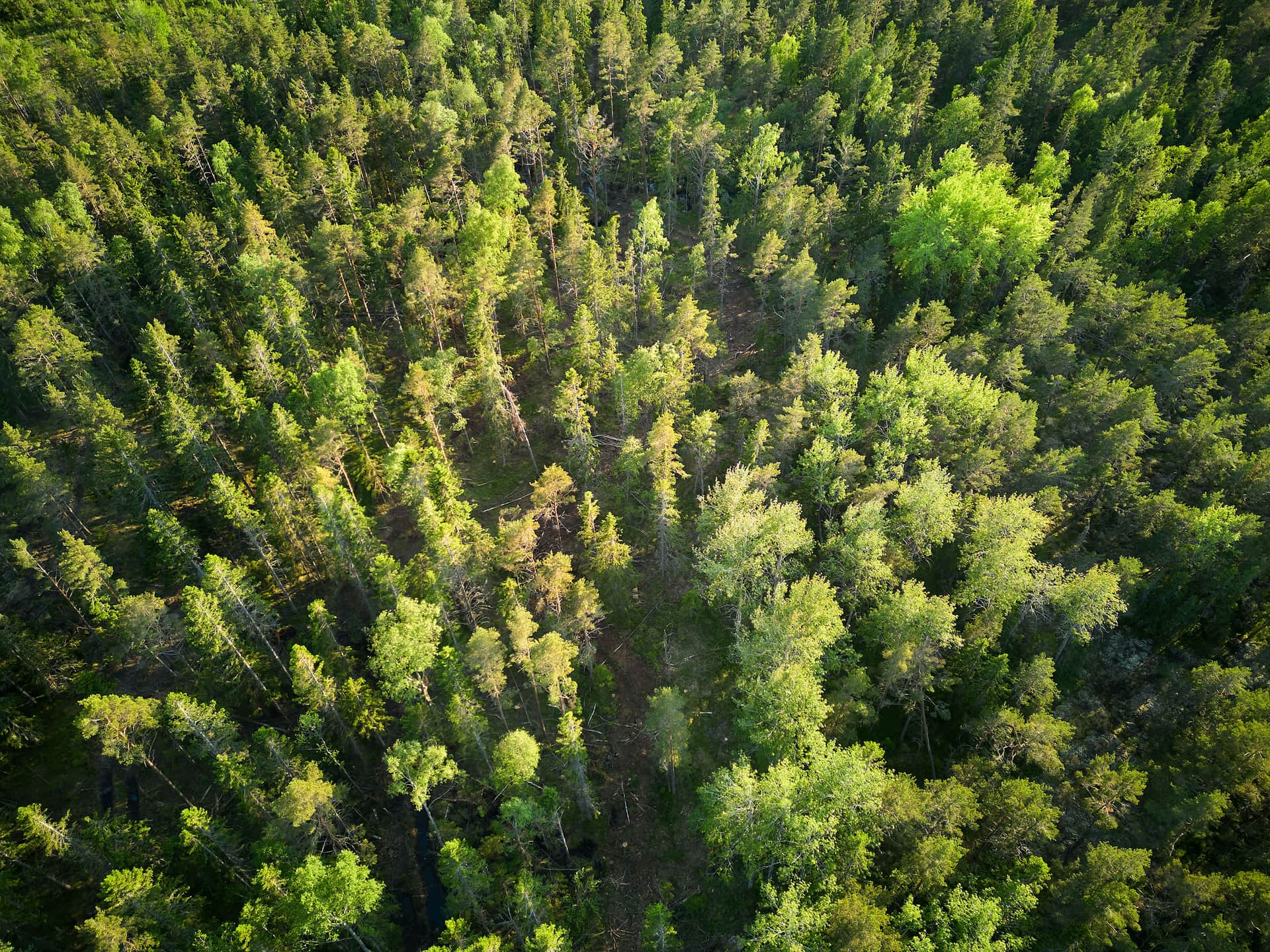
Selection harvesting (plockhuggning) is a harvesting method where scattered trees are cut throughout the forest. Removals typically focus on trees with certain characteristics or trees above a certain diameter. The harvests are usually small, which over time results in a multi-layered forest with varying tree sizes and ages.
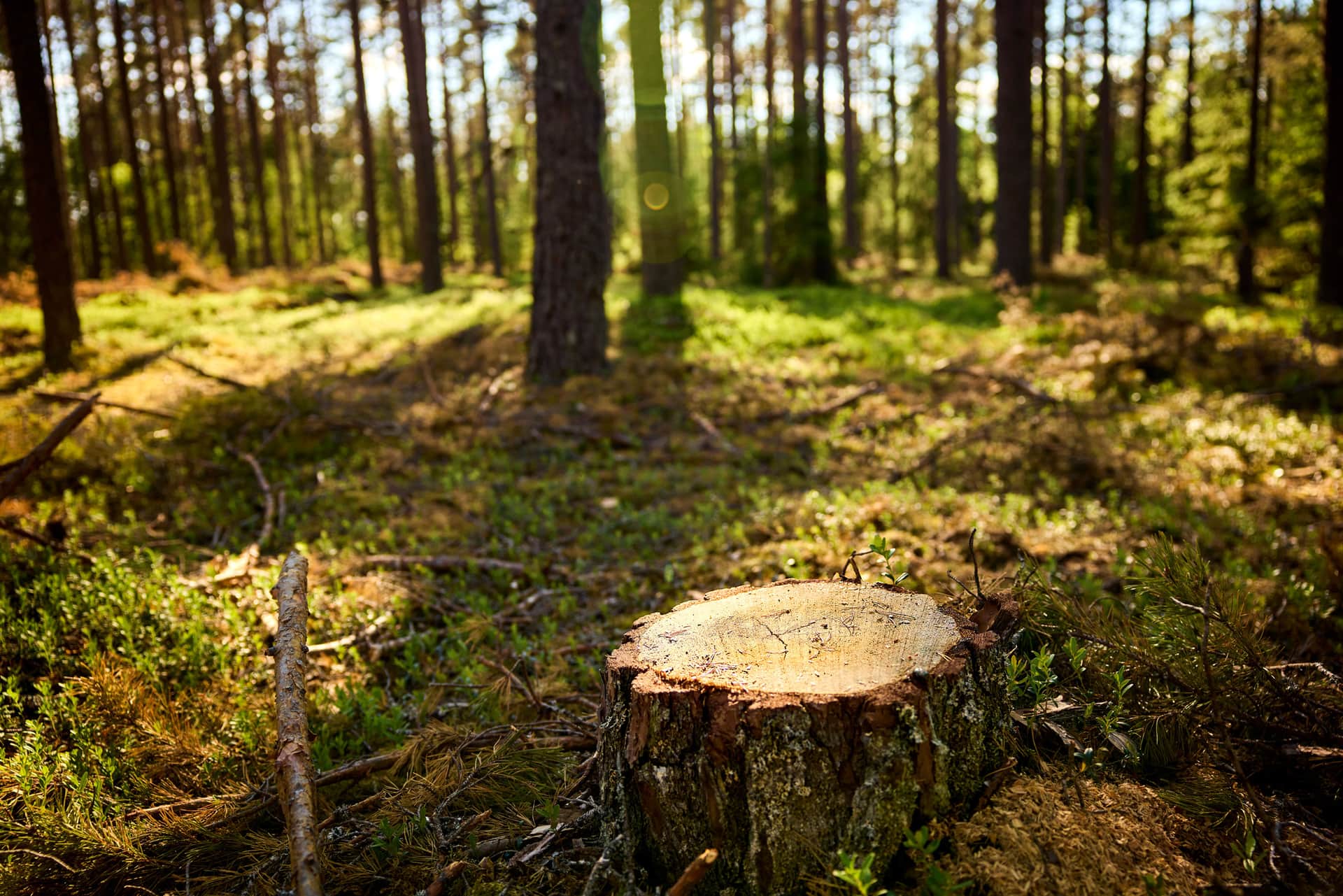
What forests and site types are suitable for selection harvesting?
Selection harvesting works in all production forests. If a forest is suitable for forestry, it’s also suitable for selection harvesting—but the structure of the starting stand determines whether it’s the most profitable option right from the first intervention.
Stratified forests can develop and be optimized in many places, but for some stand types a careful transition to selection harvesting is needed, which can reduce profitability during the transition period. In particular, our method—centered selection harvesting under the Hyggligt concept—is well suited to forests where both long-term profitability and diversity should be promoted.
Centered selection harvesting – selection harvesting optimized for profitability
Hyggligt’s harvesting method is called centered selection harvesting. What makes it unique compared to other continuous cover harvesting methods is that the tree selection is research-based and optimized for profitability. We combine that with efficient data collection and analysis, then present the tree selection in a map tool for harvester operators—together making selection harvesting straightforward and efficient.
Learn more about the Hyggligt concept and how we help forest owners and managers through digital forest inventory and analysis, digital harvest planning tools, and harvesting contracts.